
THE ELEGANT SPACE
August 2026
If I Were You
Empathy begins when we choose to step into another’s shoes and see life through their eyes. The tracks we leave—kindness, curiosity, and understanding—shape how we’re remembered.
What Happens When We Walk in Another’s Moccasins
By Caroline Phipps
Remember to walk a mile in his moccasins
And remember the lessons of humanity taught to you by your elders.
We will be known forever by the tracks we leave
In other people’s lives, our kindnesses and generosity.
Mary Torrans Lathrap
Walk a Mile in His Moccasins
When I was four, I was exposed to a story that changed my life to be who I am today. One evening, my mother began to read Anna Sewell’s “Black Beauty”, a story told from the perspective of a horse. This noble animal endures every kind of treatment from the people who own him. With every turn of the page, I felt the hopelessness and confusion of vulnerability. I felt the pain and suffering of being mistreated. And I felt relief and peace in the good times. Although the story ends happily for Black Beauty, the other, less fortunate horses haunted me.
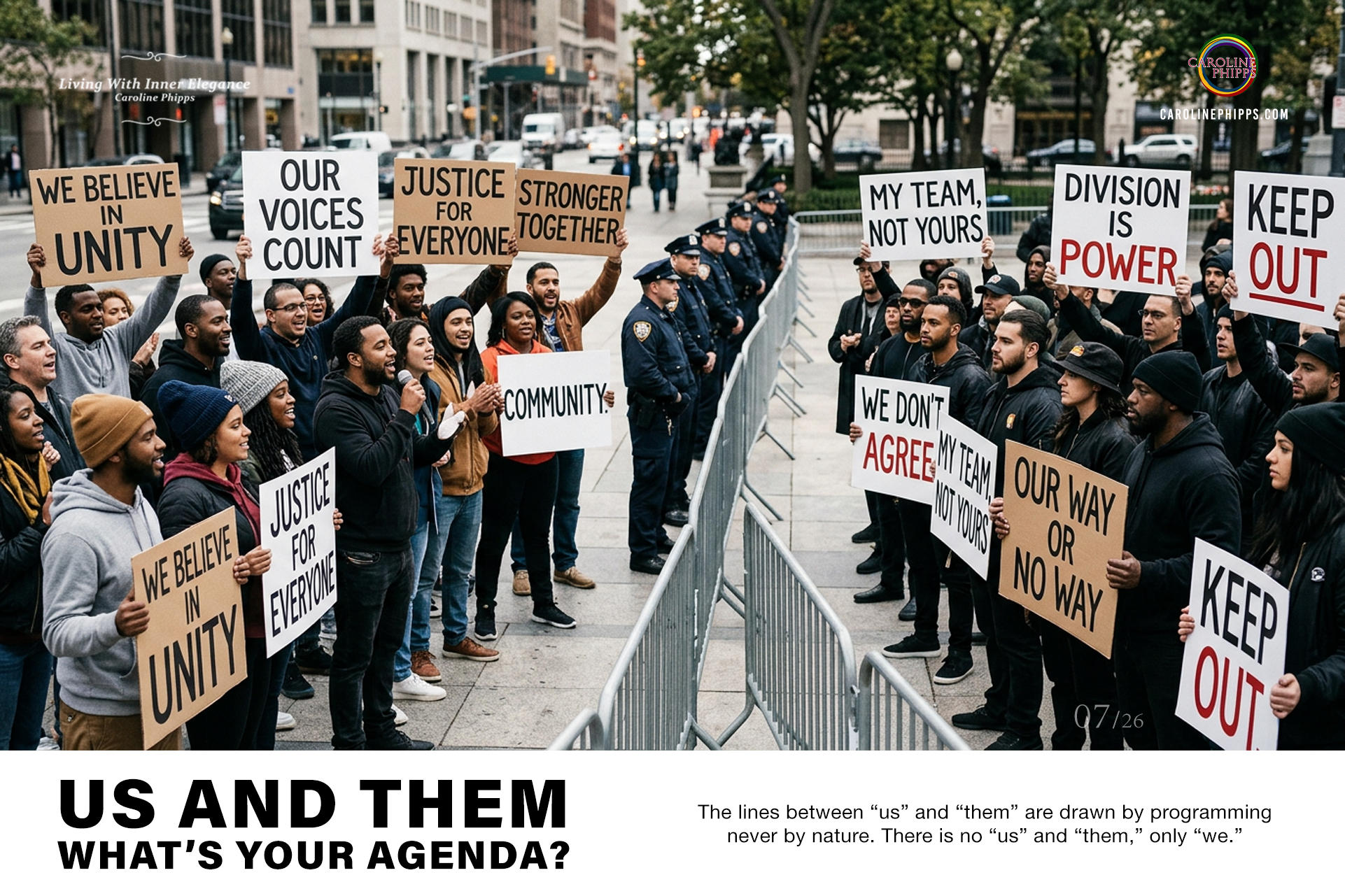
Recently, while researching my article, “Us” and “Them” – What’s Your Agenda?*, which explores the roots of division, separatism, and conflict, I referenced Jane Elliott’s 1968 empathy experiment with third-graders, Blue Eyes/Brown Eyes, which changed the children's lives forever. This landmark work dramatically demonstrated that hatred, bigotry, and prejudice aren’t inevitable human traits; they are imposed behaviors. And this, as we will see, is an important part of putting ourselves in another’s shoes.
The story behind the Blue Eyes/Brown Eyes experiment is extraordinary, as I learned when I recently talked with Jane for The Living With Inner Elegance Live Talks Podcast**. On April 4th, 1968, when the Reverend Martin Luther King, Jr. was gunned down in Memphis, Tennessee, Jane was a young 3rd-grade teacher in an all-white school in a small rural town in Riceville, Iowa. Fifty-eight years later, Jane still overflows with emotion when she tells the story of that terrible day.
When she arrived home that evening, Jane heard the devastating news from her sister. Overwhelmed with shock and grief, she knew she had to do something. Something that could somehow meet the anguish of the moment. Something that would keep the flickering flame of hope alive.
On the morning of April 5th, Jane’s husband, Darald, knowing she was considering an experiment in her classroom that could get her fired, asked her what she was going to do. The night before, the country had erupted in widespread grief and anger. Riots and protests broke out in over one hundred American cities, people died, and thousands were injured. Property was damaged, and some cities were put under federal occupation. Darald was understandably concerned about his family's welfare. With her husband’s concerns ringing in her ears, Jane set out for school.
At school, like the rest of the country, news of Dr. King dominated the day, with opinions from pupils and faculty spanning the political and cultural spectrum from grief and the death of hope for an integrated, more just country to relief that the “troublemaker” upsetting the status quo had finally been dealt with.
Jane’s third graders were no strangers to Dr. King’s life and the Civil Rights Movement, as she had been sure to educate them about this extraordinary man and his peaceful mission. But on this day of days, Jane was struggling to explain the brutal reality of racism and murder to eight- and nine-year-olds.
Taking a deep breath, she asked the children if they wanted to conduct an experiment. Jane was a great favorite, and filled with excitement and enthusiasm, they readily agreed.
At the time, the class was studying what they, and many others, believed to be an ancient Native American Sioux prayer or proverb: “Oh great spirit, keep me from ever judging a man until I've walked a mile in his moccasins." A slight aside, this quote, in fact, comes from an 1895 poem called "Judge Softly" (later named "Walk a Mile in His Moccasins") by Mary Torrans Lathrap, an American author and preacher.
Jane had come to the painful realization that talking and reading about empathy wasn’t enough. The children couldn't truly grasp discrimination by discussing the poem's words – she felt that they needed to live it if they were to truly understand.
With this prayer, Jane swallowed hard and launched her Blue Eyes/Brown Eyes experiment.
Over two days, she separated the children into two groups – those with blue eyes and brown eyes. On the first day, the blue-eyed children received privileges and status superiority; on the second day, she reversed the rules.
What Jane witnessed shocked even her to the core. Within minutes, she witnessed just how quickly arbitrary rules created an unjust hierarchy that turned kind children into cruel discriminators of one another. Just as alarming was the immediate shattering of self-esteem and academic performance among those in the targeted group.
On the second day, the brown-eyed children were afforded superiority, and the blue-eyed children became the oppressed. Highly significantly, the brown-eyed children, the horrors of oppression still raw, didn’t want to discriminate against their blue-eyed classmates. Having walked in the shoes of the oppressed, they didn’t want others to experience the same pain.
Jane’s class of ‘68 has reunited on special anniversaries over the years. Looking back, alumni describe the experiment as something that left a mark on their souls. Some even still felt the guilt of falling so easily into bullying behavior. The sting of the exclusion they experienced for one day walking in another’s shoes in their early lives was so profound that empathy became a chosen way of life, and in their words, they were “forever vaccinated” against the virus of prejudice.
Jane’s experiment has lasted a lifetime for the children in her care, just as my early introduction to Black Beauty has done for me. The storytelling was so potent that it taught me what empathy means – seeing the world from another’s perspective - and why it matters. But what would have happened if I hadn’t listened in the way I did? What would have happened if I hadn’t wanted to hear it? My life would be a different one because this early experience has much to do with my capacity to experience the world – my connection with the natural world, understanding the connectivity of all things, and the sacredness of life in its myriad forms.
The world has always been divided, but today we’re made increasingly aware of it because of our access to technology. And here we have a choice: when we’re exposed to stories of others often in less fortunate circumstances than we are – war zones, environmental disasters, economic struggles and so on, we can either be apathetic, detached, nonchalant, indifferent, insensitive or cold, or we can understand the heightened significance of empathy in our current moment. Empathy is not merely desirable; it is essential for meaningful connection and understanding for the future of our planet.
So, where do we start? Empathy is best understood as a capacity to want to recognize, understand, and even try to share the feelings and perspectives of other beings. In the past, it was considered more of a character trait – something we were born with - but increasingly, experts view it as a dynamic social skill that can change and improve with practice rather than a fixed personal label.
So how can we increase our own skill capacities? In this case, for empathy.
It may seem complicated, but it starts pretty simply: get curious. Everyone who walks this earth wears a different pair of moccasins and carries with them a unique story, a different lens through which to see and experience life. With everyone you meet, and every story you hear, someone is dealing with something you may be unaware of and probably don't fully understand. So be open to taking a deep dive – there’s always more to discover about the lives of others that can help your understanding of who and what they are and why they behave as they do. Do your research, acquire knowledge, ask questions, don’t accept things at face value, and listen carefully. This foundation is vital for increasing your capacity to put your imagination to work and step into their shoes to glimpse what life looks like from where they stand.
Nurturing empathy even helps us to better understand people whose behavior we find impossible to comprehend – particularly, let’s say, if they are cruel and bullying – because empathy isn’t about condoning hatred and prejudice and giving them a pass; it’s about getting a better understanding of it and where it comes from. So, rather than snap judgments, find out more and make an informed judgment later. This level of discernment helps because, at the very least, it has the potential for making things better, as the life and work of Jane Elliott illustrates.
When you choose to increase your capacity for empathy, your life becomes infinitely more interesting and easier. Empathy builds trust and deepens your connections because others feel seen and heard, just as you like to be seen and heard. You see life in a more nuanced way, develop a sense of its complexities, judge less, and find more peace and security—both in yourself and with others.
Above all, at the end of the day, what will remain of us will reside in the memories of those whose lives we’ve touched. As Mary Torrans Lathrap wrote, “We will be known forever by the tracks we leave in other people’s lives, our kindnesses and generosity.”
“Us and them” mindset,
Here’s the article:
RELATED RELATED ARTICLES
WATCH JANE ELLIOTT
BLUE EYES / BROWN EYES
1968 EXPERIMENT
For more information about the upcoming Living With Inner Elegance Live Talks Podcast with Jane Elliott, email info@carolinephipps.com.
Download the
If I Were You
Infographic

